Collecting Multilingual Voice Data Across Europe
Discover how DATAmundi collected authentic voice recordings across 10 European countries and languages, turning a projected 65% delivery rate into 98% through collaborative problem-solving, rigorous AI-detection quality control, and scalable multi-market recruitment.
60,000
Recordings Delivered
98% Target Hit
100% Authentically Human
10
Languages
4 Recording Types
3x Capacity Increase
The Client
Our client is a data engineering and AI services partner, strategically supporting enterprises building AI systems. They came to DATAmundi with an ambitious goal: collect 60,000 authentic voice recordings across 10 European countries to support voice recognition systems.
The recordings needed to be genuinely human, no synthetic or AI-generated audio, across multiple languages, telecom networks, and recording formats. It was a high-stakes brief that required a partner with deep experience in multilingual data collection, scalable recruitment infrastructure, and rigorous quality control processes. The client chose DATAmundi as their delivery partner to make it happen.
The Brief
The project required four distinct recording types in each of the 10 target countries, totaling 6,000 recordings per market:
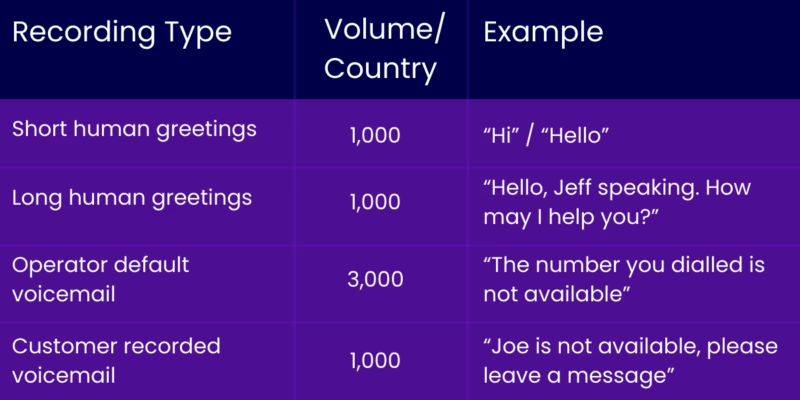
Total target: 6,000 recordings × 10 countries = 60,000 recordings
The Challenge
As the project moved from planning to execution, both teams quickly discovered that this was far more than a straightforward volume exercise. Technical constraints significantly limited the ability to scale: collection was restricted to just three telecom carriers per country, and each phone number was capped at only five recordings. With 60,000 recordings to collect across 10 markets, these restrictions created a severe bottleneck that made reaching volume targets extremely challenging under the original parameters.
Operator voicemail collection introduced an additional challenge, as many operators automatically read the contributor’s phone number aloud. This created privacy concerns and reduced participation, since contributors were reluctant to share recordings containing personally identifiable information (PII).
At the same time, the integrity of the dataset required ongoing safeguards. A significant number of contributors attempted to submit AI-generated audio instead of authentic human recordings. In a project where the entire value of the dataset depended on genuine human voices, even a small percentage of synthetic audio slipping through would have undermined the client’s end deliverable. Meanwhile, recruitment across 10 diverse European markets also brought distinct operational challenges, as each country showed different engagement patterns, privacy expectations, and cultural norms around participation in data projects.
Adding to these pressures, a language requirement shift in Belgium meant that recordings initially collected in French had to be scrapped entirely and re-collected in Flemish. These compounding constraints pushed projected delivery down to just 60-70% of the target volume, well short of what the client needed to fulfil their commitment.
How DATAmundi Rose to the Challenge
Instead of accepting the gap in delivery, DATAmundi worked hand in hand with the client to systematically dismantle each barrier. The client’s willingness to collaborate on solutions and their trust in our recommendations helped stabilize the project and move it forward.
- Transparent, data-driven communication: DATAmundi held weekly status calls with projections backed by real numbers. When bottlenecks appeared, we presented solutions alongside the data, allowing the client to act quickly.
- Collaborative constraint removal: We proposed two key operational changes to address scaling barriers. Collection expanded from three approved telecom operators to all operators per country, allowing the team to prioritize voicemail systems that did not announce contributors’ phone numbers and reducing privacy-related participation concerns.
- Adjusted recording limits: In parallel, the per phone recording cap was increased from 5 to approximately 15 for the remaining three recording categories, rather than operator recordings, improving collection capacity in harder-to-source markets such as Ireland, the Netherlands, and Belgium. The client approved both changes, effectively tripling delivery capacity.
- Aggressive, market-specific recruitment: DATAmundi expanded recruitment beyond the existing contributor network using social media groups, freelance marketplaces, and referral programs. Each market used a locally tailored acquisition approach. Where needed, we supplied SIM cards for unique numbers and tested multiple recording systems, including communication APIs, to improve collection efficiency. In total, 5,500+ freelancers were contacted, with nearly 2,000 contributors delivering approved recordings.
- Rigorous AI-detection and quality control: Every recording passed through DATAmundi’s quality assurance checks, analyzing voice patterns and sound quality to filter synthetic audio. Despite pressure to meet volume targets, both teams kept strict authenticity standards, protecting the final dataset.
- Adaptive, real-time operations management: DATAmundi built tracking systems covering country, language, and recording type, aligned collection schedules to weekly deliveries, and handled requirement changes, including the Belgium French to Flemish transition, with minimal timeline impact. Our resource coordination supported work across all 10 markets simultaneously.
Overall, 53 telecom operators were evaluated, with recordings successfully collected from 47 operators, including over 1,000 voicemail recordings completed.
The Results
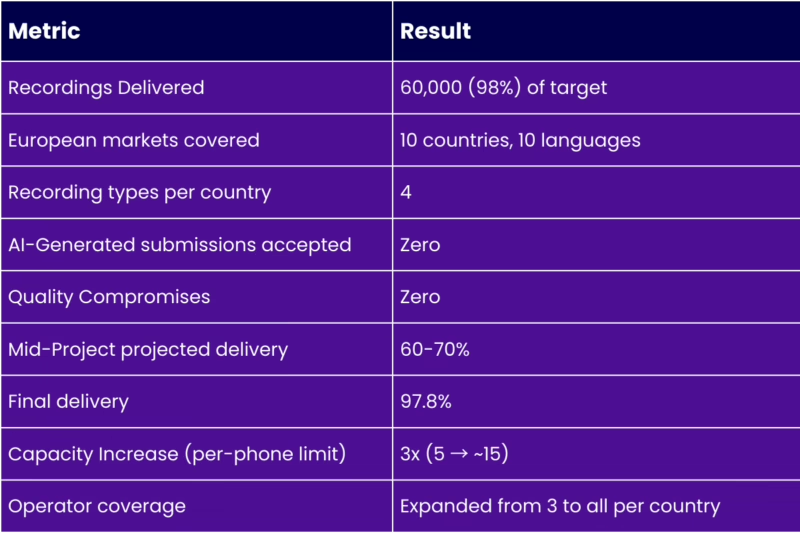
By unblocking the constraints, we were able to move from a projected delivery rate of 60-70% to approximately 98% fulfilment and deliver the complete dataset.
In total, approximately 60,000 required recordings were delivered across all 10 countries, covering all languages and all four recording types. This represents roughly 17,000 additional recordings beyond the original projection, achieved through expanded recruitment, constraint adjustments, and operational changes.
All recordings in the final dataset were verified as human-generated. In an environment where synthetic audio is increasingly common, this meant the client received a fully authentic dataset without compromising quality to meet volume targets.
The Business Impact
The client received a high-integrity dataset of nearly 60,000 verified human voice recordings across 10 European markets, delivered on schedule and ready for immediate use with full confidence in authenticity. The engagement supported their delivery objectives while maintaining strict quality requirements and enabling coordinated voice data collection at scale across multiple
Preparing for your next multi-market AI project?
Learn more about DATAmundi’s Data Collection services or get in touch to discuss your next AI project.